
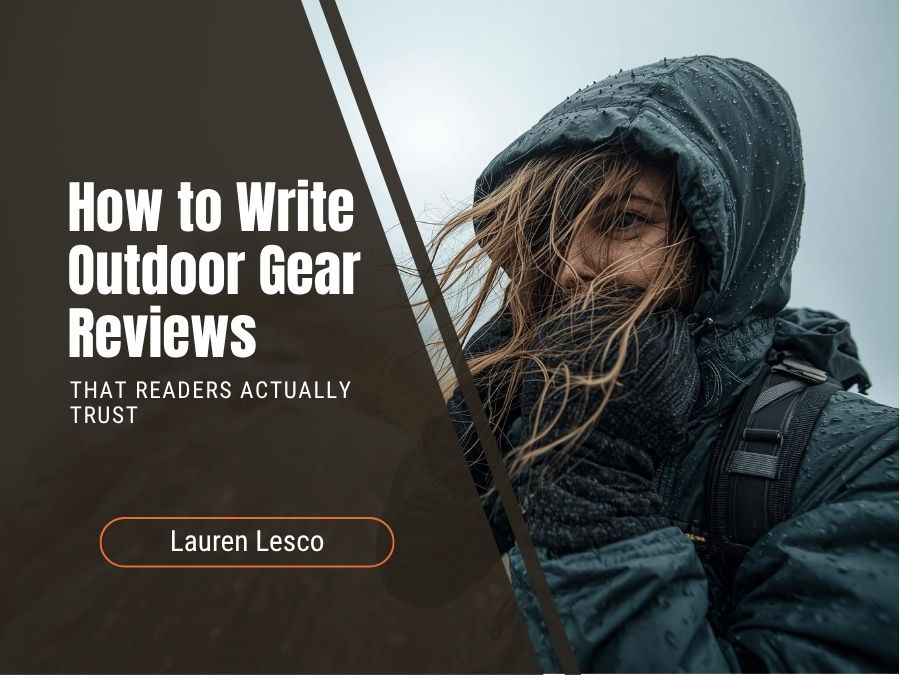
How to write outdoor gear reviews that readers actually trust
You are not just describing an object. You are explaining a relationship between a person, a place, and a tool under stress. Great gear writing begins where marketing ends. It begins when the weather turns, when the trail steepens, when the promise on the hang tag has to keep you warm or keep you safe.
Start with one true scene
Open inside a moment that proves something about the product. Cold rain, slick boardwalks, sunrise at ten thousand feet with wind that bites. Keep it short and tactile. Let the reader feel what changed when the gear entered the picture. Two or three sentences are enough. The scene is not decoration. It is your thesis in real life.
Example
The granite was wet and the temperature had dropped ten degrees during the last thousand feet of gain. I tightened the hood with gloves on and the zipper did not catch. When the storm finally opened, the lining stayed dry enough for me to keep moving. That is the whole review in one breath.
Define the job to be done before you test a single thing
Every piece of gear exists to do a specific job for a specific user in a specific place. Say that job out loud in your notes. Three day alpine trip in shoulder season for a weight conscious hiker. Winter day tours for a parent who stops often to manage layers for kids. Sand and heat for a desert runner who carries water and a tiny first aid kit. Once the job is clear, your test plan writes itself.
Build a real test plan and keep a log
Writers cut corners when they do not have a plan. Make one. Record miles, elevation, temperatures, wind, precipitation, surface, pack weight, and time on gear. Note hot spots, zipper snags, buckle slips, sole wear, delamination, and repairs in the field. Photograph wear points before and after. Honest logs make honest reviews.
Field log essentials
Date, route, distance, gain, weather, pack weight, terrain, issues, fixes, photos taken
Use a control so your verdict means something
Comparisons sharpen judgment. Pick a known baseline item you trust. Take both on the same route. Swap at the turnaround. The contrast will reveal what the new product truly does better or worse. Without a control you are guessing.
Measure what buyers actually care about
Readers trust numbers when they map to real decisions. Weigh the item on a scale and write down the exact result. Measure packed size with a ruler. Time dry out after a soak or a storm. Check warmth by sitting still on a cold morning and recording comfort at ten minute intervals. Count the number of steps it takes to pitch a shelter. Verify the claims a brand prints on the tag. If you cannot verify, say so.
Separate fact from feeling
Facts are repeatable and do not care about your mood. Feelings are just as important because outdoor travel is a human experience. Label them both. Fact, the outsole lost edges after sixty trail miles on abrasive granite. Feeling, confidence on wet wooden bridges was excellent and made me move faster than usual. The best reviews hold both truths at once.
Tell the truth about tradeoffs
Every advantage has a price. Light weight can mean lower durability. Burly can mean heavy and loud. Waterproof can trap sweat when you climb hard. Say what the product gains and what it gives up. Show where you drew the line for your use case. This is how trust is built.
Write in plain language
Drop jargon unless it helps a buyer make a decision. Replace marketing adjectives with action. Instead of superior breathability, describe how quickly a base layer dried under a pack during an hour long climb. Instead of unparalleled traction, describe the descent over wet roots and what your feet did. Readers do not want poetry about fabric. They want to know if they will freeze or slip.
Give the basics and then add what only you can add
Always include name, model, size tested, verified weight, materials, price, and availability. Then move beyond the spec sheet. Show the trick that made the gear easier to live with. The pocket that actually fits a map. The hood that seals even with a helmet. The sternum buckle you can operate with mitts. These are the details that separate a test from an ad.
Be transparent about how you got the gear
Say how the item arrived, how long you used it, and whether you kept it. If an affiliate link exists, tell the reader. If you requested a second sample because the first failed, say that too. Readers notice what you hide more than what you reveal.
Ratings without games
Use a compact rubric that mirrors real buying decisions. Comfort, performance, durability, weight or packed size, value. Explain one or two sentences for each score so stars do not become a game. Save perfect scores for rare cases and be ready to defend them with logs and comparisons. If an item is unsafe, explain clearly and contact the brand. Most misses do not deserve a public beating. Simply do not cover products that fail without a learning value.
Structure that keeps the reader moving
Lead with the scene. Offer the quick take in one or two honest sentences. Present the job to be done and your test plan in a short paragraph. Give verified specs and the numbers that matter. Walk through performance in the field using headings that match how the gear is used. Comfort, weather protection, traction, setup, maintenance, durability so far. Then discuss tradeoffs and surprises. Close with placement in the market. Who should buy, who should skip, and two smart alternatives with one line about why.
Photographs with a purpose
Pictures are evidence, not decoration. Include a scale shot for verified weight. Packed and deployed views. On trail context. Close ups of wear and repairs after real use. The best photo in a gear review is often the least pretty one.
Ethics that keep you hired
Never promise coverage in exchange for a sample. Never copy a press release and call it field tested. Never hide a failure that could get a reader hurt. If a brand calls to argue about a score, listen, re check your log, and stand by your evidence. Your authority comes from restraint, clarity, and care.
A sample opening and flow you can reuse
Opening scene
The trail turned to creeks during the last hour and wind found every gap in the ridgeline. I pulled the hood with cold fingers and the cord ran clean. When the rain hardened, the fabric darkened but the inside stayed dry enough that I could keep moving without a layer change.
Quick take
This shell favors movement in cold rain and steady wind. It is not a sauna suit and it is not a magic shield. It is a reliable partner for people who keep climbing when the weather stops being polite.
Job to be done
Day missions above tree line in shoulder season for hikers who run warm and carry small packs.
Test plan
Six outings across four weeks. Sixty two trail miles with seven thousand feet of gain. Temperatures from thirty eight to fifty one. Rain twice, sleet once, steady wind on two ridges. Pack weight between eight and twelve pounds. Notes taken every hour and after each outing.
Specs and numbers
Size medium. Verified weight twelve point three ounces on a kitchen scale. Face fabric is a dense nylon with a light tricot backer. Main zipper is two way and did not snag during field use. Hem cord has single pull and can be operated with gloves.
Performance
Comfort and movement were excellent. The pattern allows full overhead reach without hem lift under a hip belt. Breathability was good on climbs in cool air. I opened the pit zips twice during high output but never felt steamy. Weather protection was strong during two hours of steady rain. Once the outside wetted out, the lining remained comfortable enough to keep pace. The hood sealed around a bare head and also cleared a climbing helmet without pulling across the brow.
Durability so far
No seam creep or delamination after four weeks. The face shows light scuffing where the pack rode across the shoulders. No snags at cuffs or hem.
Tradeoffs and surprises
The fabric is a little loud in calm air. The single pull hem cord is quick but can loosen a touch during long descents. I would trade a few grams for a slightly thicker zipper pull.
Placement in the market
Buy this if you value movement and real weather time over extreme minimum weight. Skip it if you need silent fabric for hunting or birding. Consider Brand A for a lighter option with less robust face fabric. Consider Brand B if you want a quieter fabric and do not mind a small weight penalty.
Testing notes and disclosure
Item provided by the brand for review. Four weeks of field time. I returned the sample after testing.
Final reminder
The point of a gear review is not to impress a brand. It is to protect a reader. Test until the shine wears off. Keep a log. Tell one clear story. Give numbers that matter. Explain the tradeoffs. Place the product honestly among its peers. If you do those things with care, your reviews will age well and your audience will come back when it is time to buy.